
From ukiyo-e to the clear line: cross-cultural echoes in visual storytelling
When I visited a Hiroshige exhibition in Tokyo years back, I was struck not only by the beauty of the prints, but by an unexpected sense of familiarity. Standing in front of these nineteenth-century woodblock landscapes, I kept thinking about something much closer to home: the Tintin comics I grew up with in Belgium.
That moment crystallized something I had sensed intuitively for years — that tradition rarely disappears. Instead, it resurfaces in new forms, translated across time, media, and culture. Few examples make this more visible than the influence of Japanese woodblock printing on modern visual storytelling, both in the East and in the West.
In Japan, traditional printing techniques such as ukiyo-e laid the foundations for what would later evolve into manga and anime. Artists like Hiroshige and Hokusai refined woodblock printing into a remarkably sophisticated visual language: flat planes of color, strong and confident contours, unconventional cropping, and a heightened sensitivity to rhythm, movement, and atmosphere. These images were not simply decorative; they functioned as narrative fragments, capturing moments in time with clarity and restraint.
What is less often acknowledged is how deeply this visual language influenced Western European illustration and comics — particularly in the early twentieth century. One of the clearest examples is the work of the Belgian artist Hergé, creator of The Adventures of Tintin.
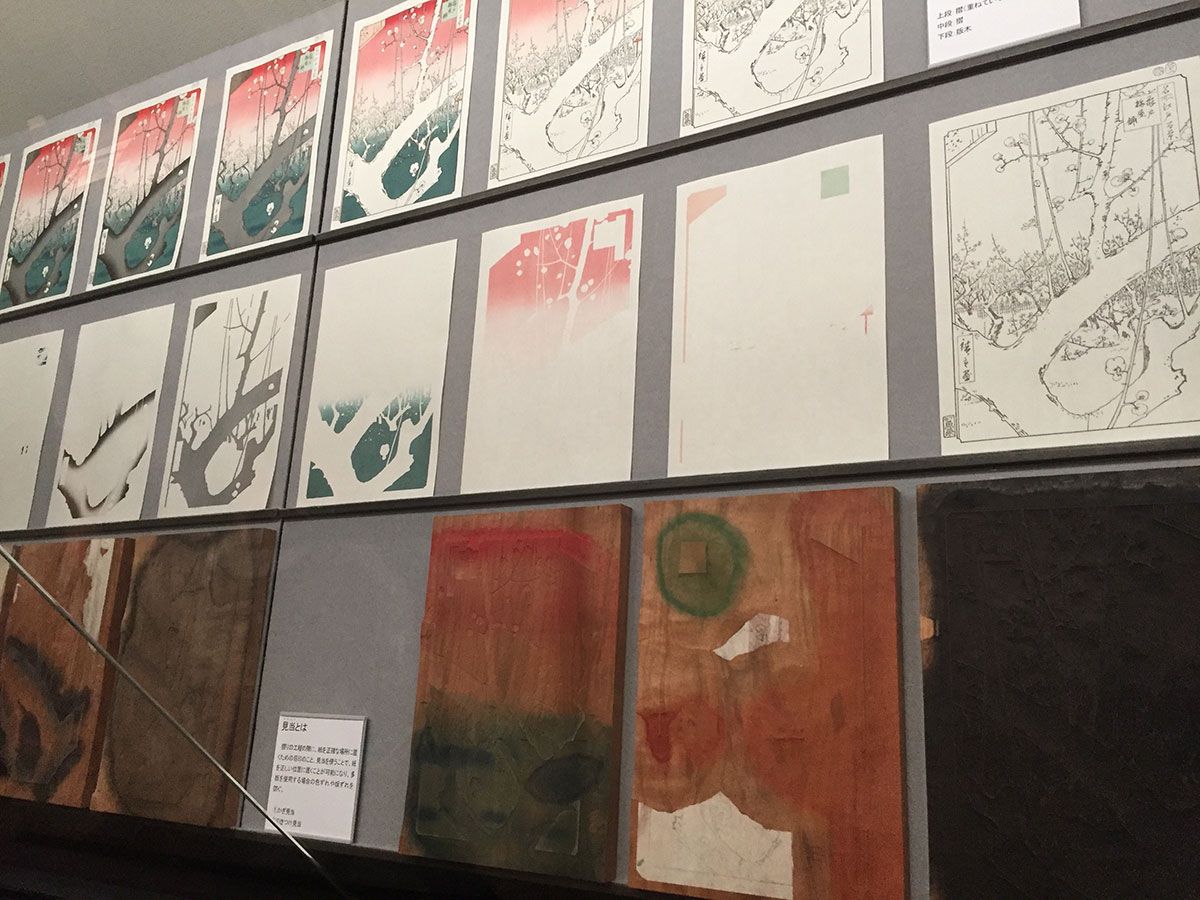
Woodblock print display at the Edo Museum in Tokyo
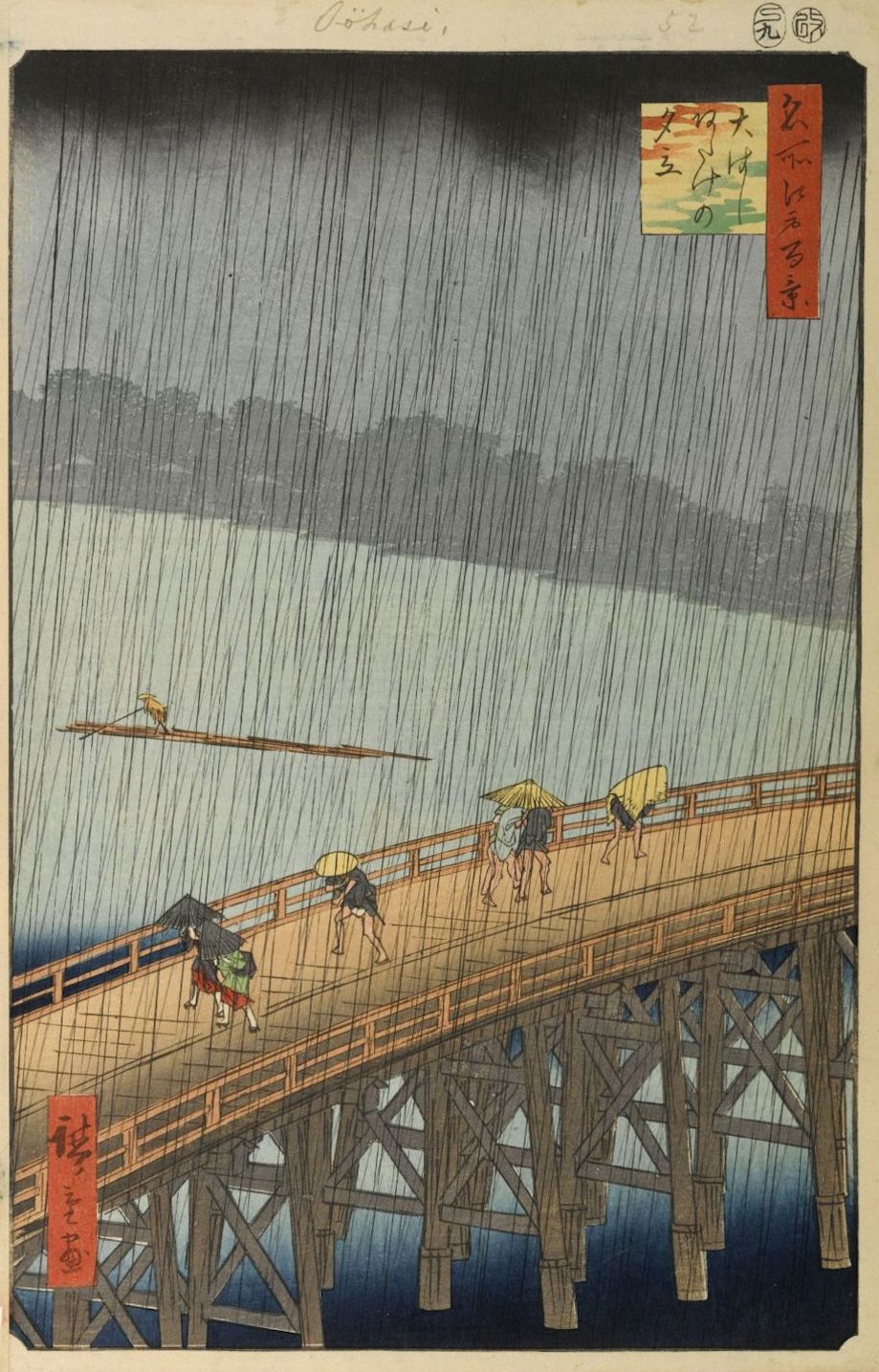
Hiroshige – Sudden Shower Over Shin-Ohashi Bridge and Atake (Ohashi Atake no Yudachi)
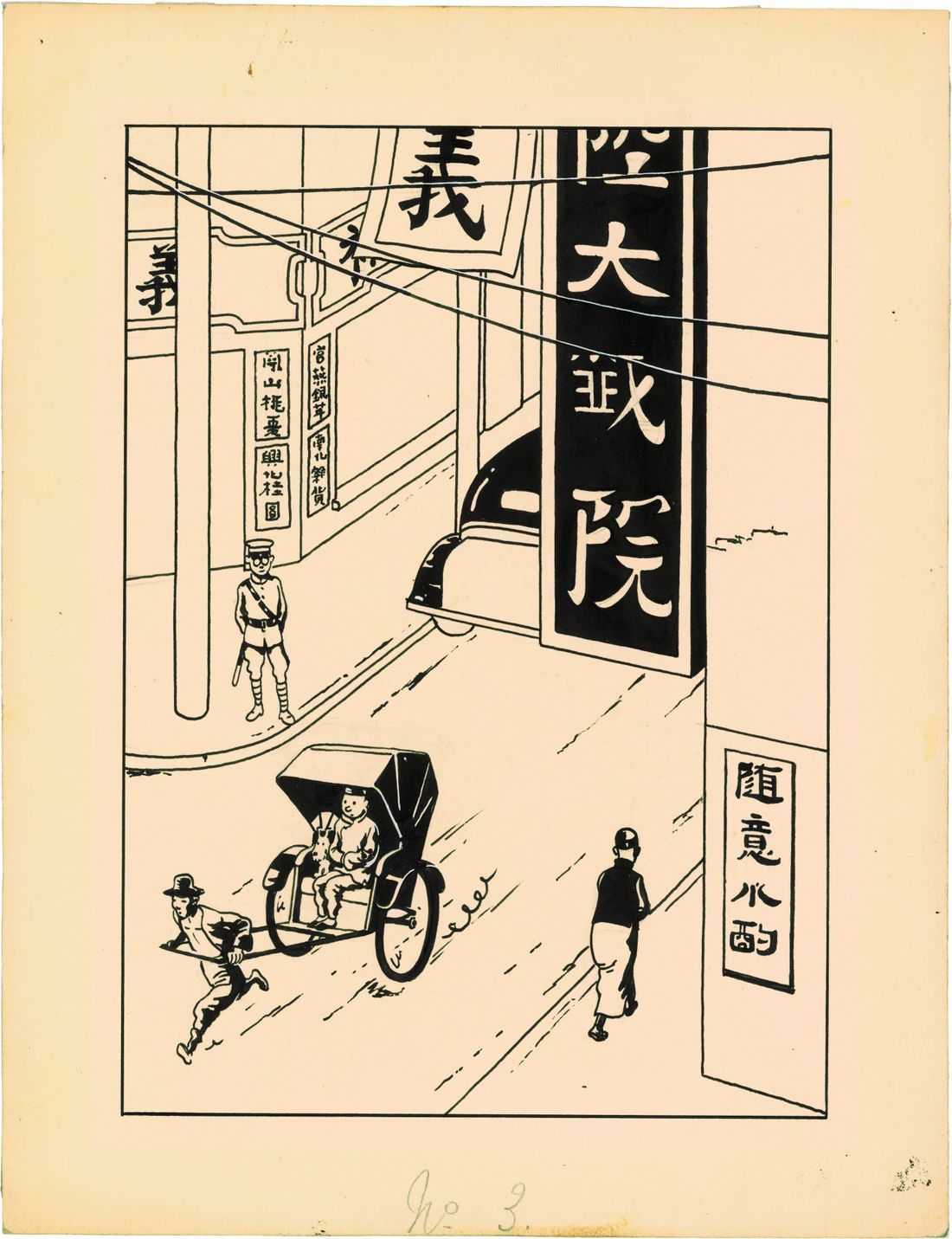
A print from The Blue Lotus by Hergé (1907-1983): influenced by Chinese woodblock prints.
The clear line and Japanese influence
Hergé is widely regarded as one of the pioneers of the “ligne claire” (clear line) style: clean, uniform outlines; flat, unshaded colors; and compositions designed for maximum legibility. While often framed as a distinctly European approach, many of its defining characteristics echo the principles of Japanese woodblock printing.
Hergé had a well-documented admiration for Japanese art, and the parallels are hard to ignore. The precision of line, the absence of chiaroscuro modeling, the careful orchestration of foreground and background, and the cinematic framing of scenes all resonate strongly with ukiyo-e aesthetics. Like Hiroshige’s landscapes, Tintin’s panels often prioritize clarity over realism and composition over dramatic excess.
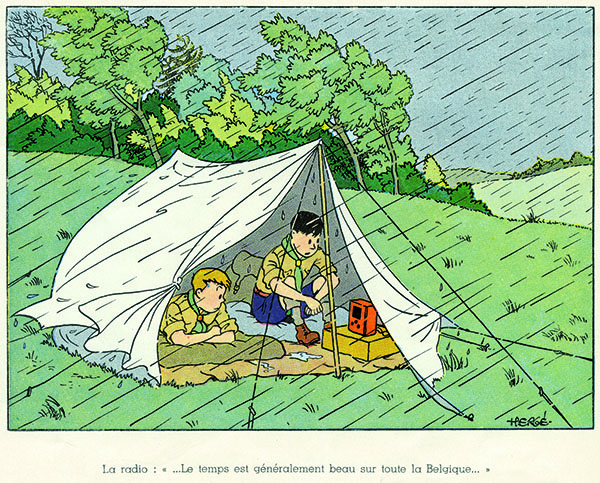
Page of a calendar designed by Hergé (1940)
A long history of exchange
Japanese woodblock printing itself is the result of centuries of cultural exchange. The technique originated in China long before it reached Japan, but it was the Japanese who perfected it, developing complex multi-block methods to achieve layered, vibrant color compositions. Interestingly, these innovations were themselves influenced by European color prints brought to Japan by Jesuit missionaries in the sixteenth century, particularly early chiaroscuro woodcuts.
By the nineteenth century, the flow of influence reversed. Japanese prints entered Europe in large numbers and profoundly impacted painters, designers, and illustrators — a movement later known as Japonisme. Beyond stylistic inspiration, this encounter challenged Western ideas about perspective, composition, and visual hierarchy.
Hergé’s work can be seen as part of this broader continuum. His comics are not copies of Japanese prints, but translations of a visual philosophy adapted to a new medium and cultural context.
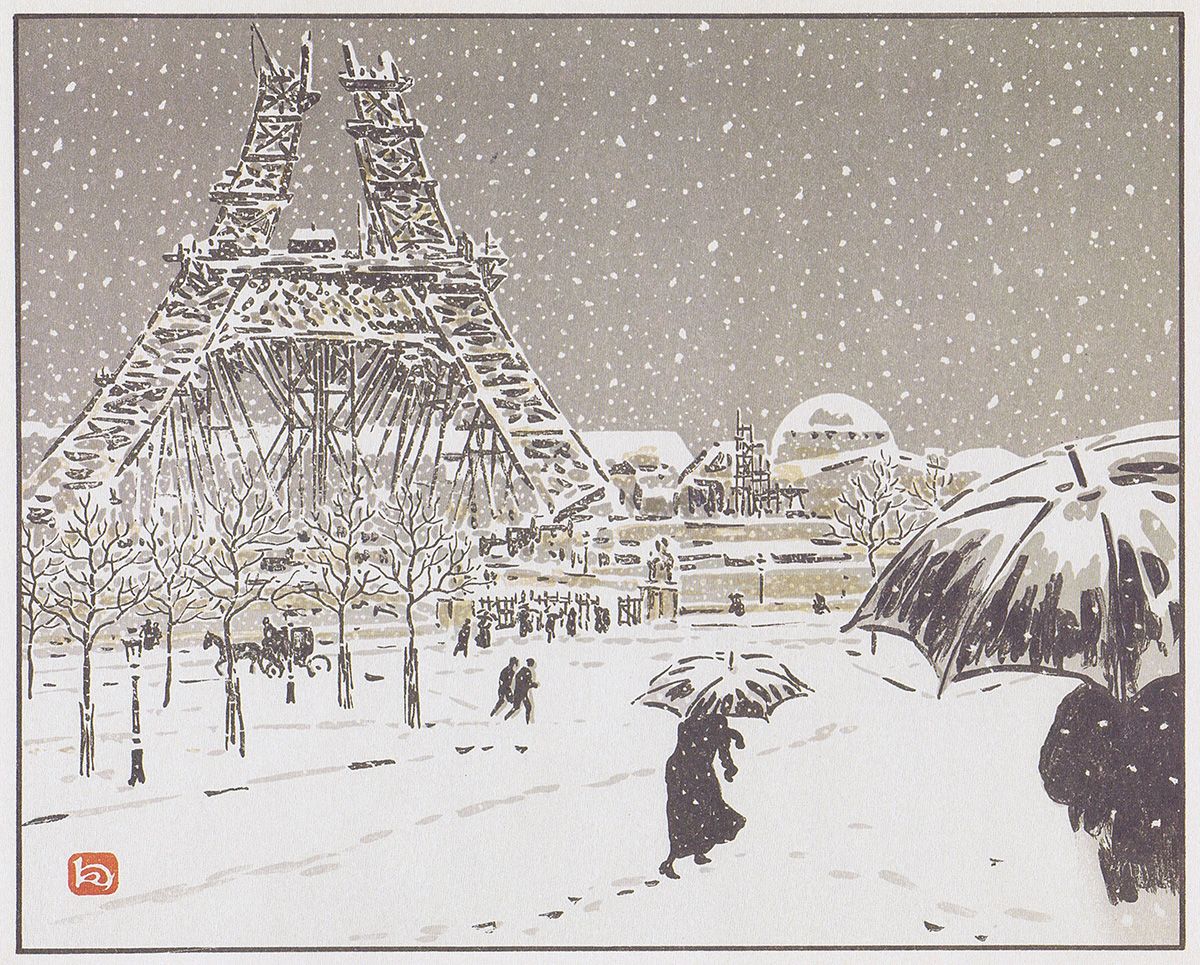
The Tower Under Construction from Henri Riviere (1888-1902)
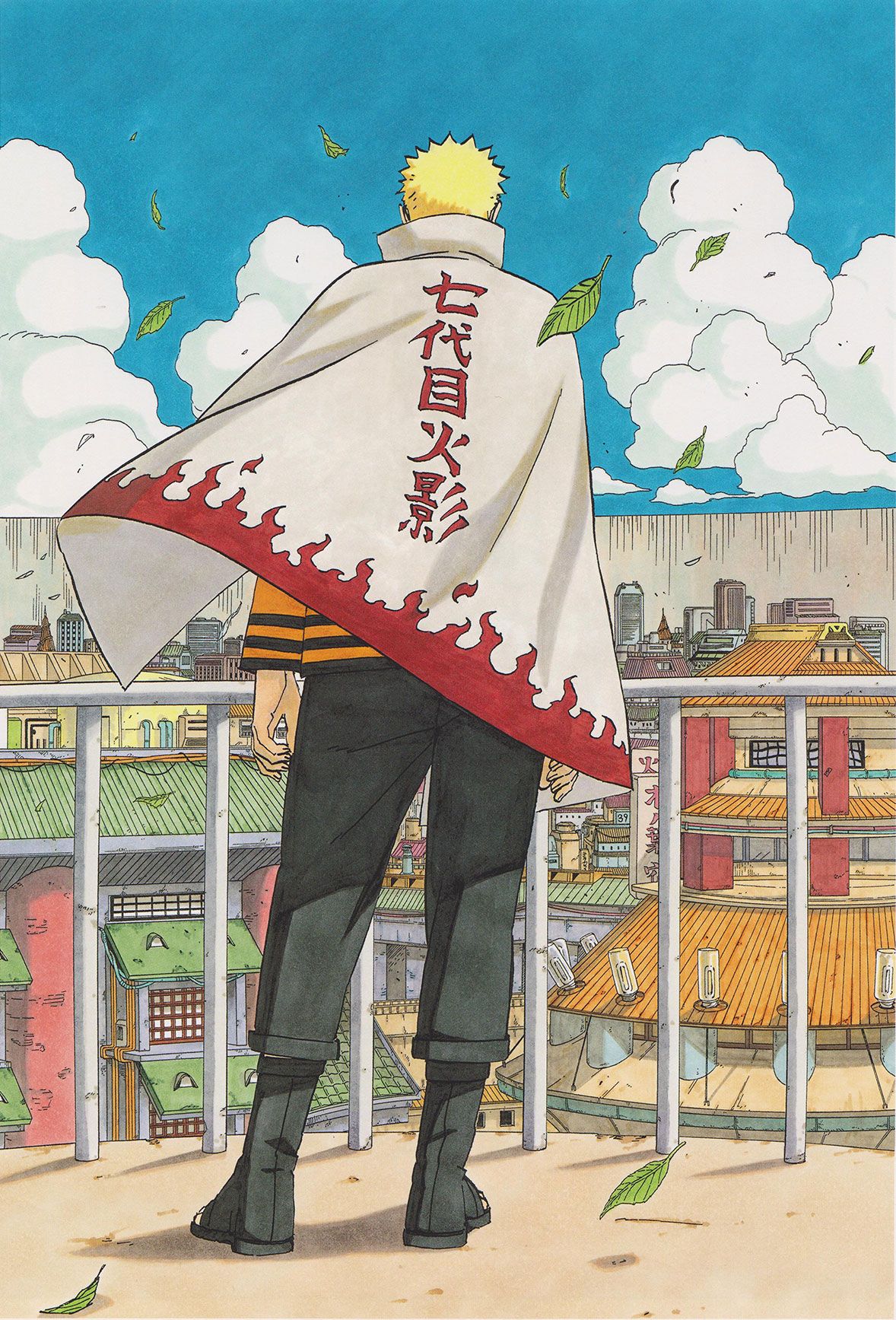
Naruto Shippūden Manga by Masashi Kishimoto (1974 – )
Who influenced whom?
Looking at this history, the question of influence becomes difficult to answer in linear terms. Chinese printing techniques shaped Japanese woodblock art. European missionaries influenced Japanese color printing. Japanese prints transformed Western modern art and illustration. And Western comics would later feed back into global visual culture — including contemporary manga.
Rather than a one-way transmission, this is a continuous loop of influence. Tradition informs modernity, which in turn reshapes tradition. Standing in that Tokyo exhibition, it became clear to me that the visual language I associated with my childhood in Belgium was part of a much older, global conversation.
Seen this way, the connection between Hiroshige and Hergé is not coincidental. It is a reminder that creativity evolves not in isolation, but through ongoing exchange — across cultures, media, and time.
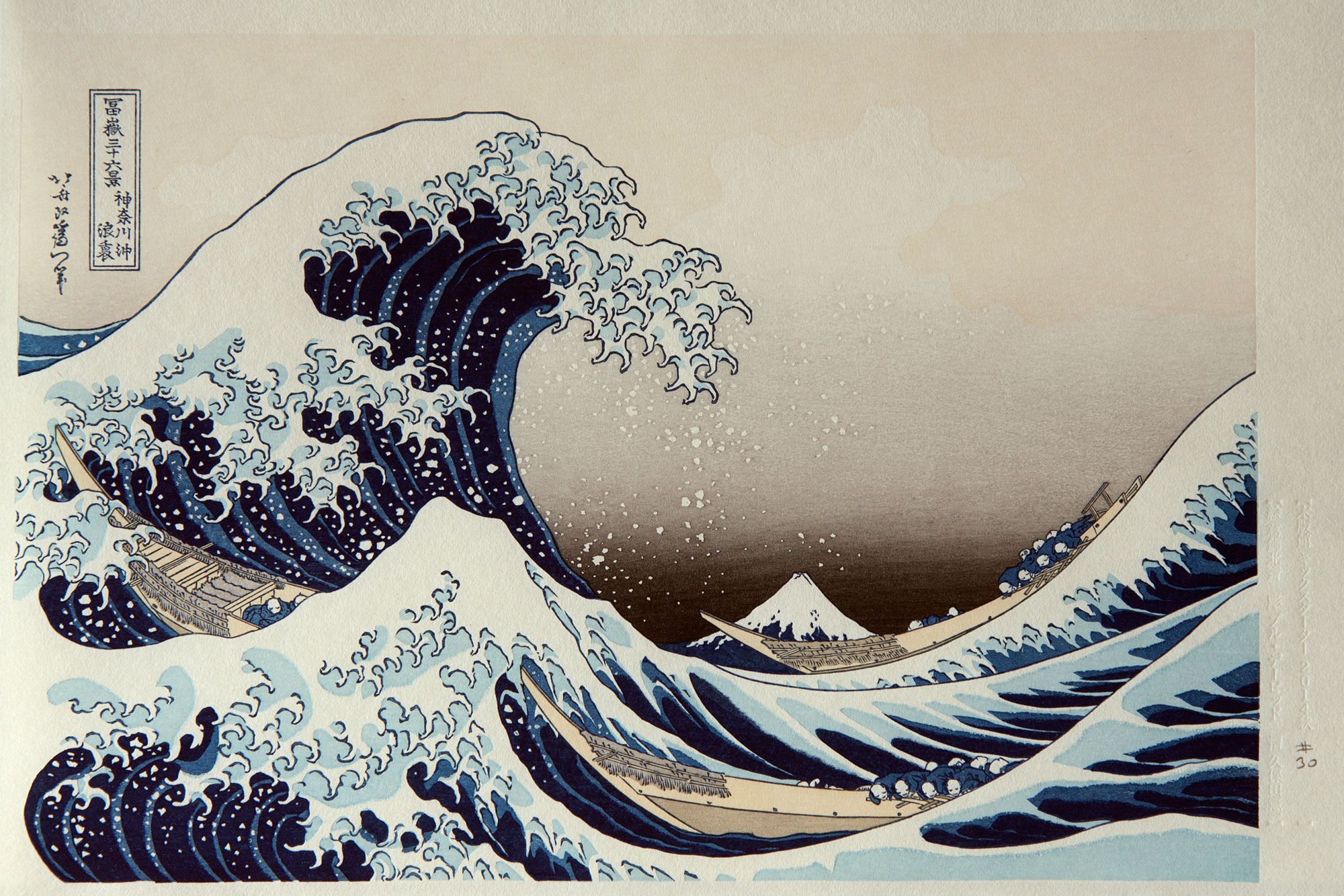
The Great Wave off Kanagawa, Hokusai, 1831
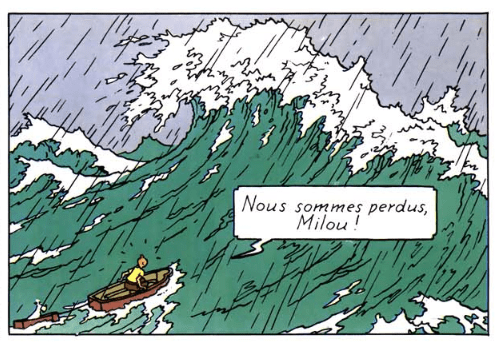
Tintin: Les Cigares du Pharaon, Hergé, 1932