
How the medium of design is continuously changing
Design is a field that has been changing in response to technology. Every new medium of communication—be it the printed word, the press, the screen, or the interface—has altered not only the way we approach designing but also the very essence of the term “design.”
From the illuminated codex to the digital dashboard, every change in the tools of the trade has altered our approach to seeing the world, organizing our thoughts, and communicating our ideas. The designer’s job has been to make sense of the complex from the perspective of the era.
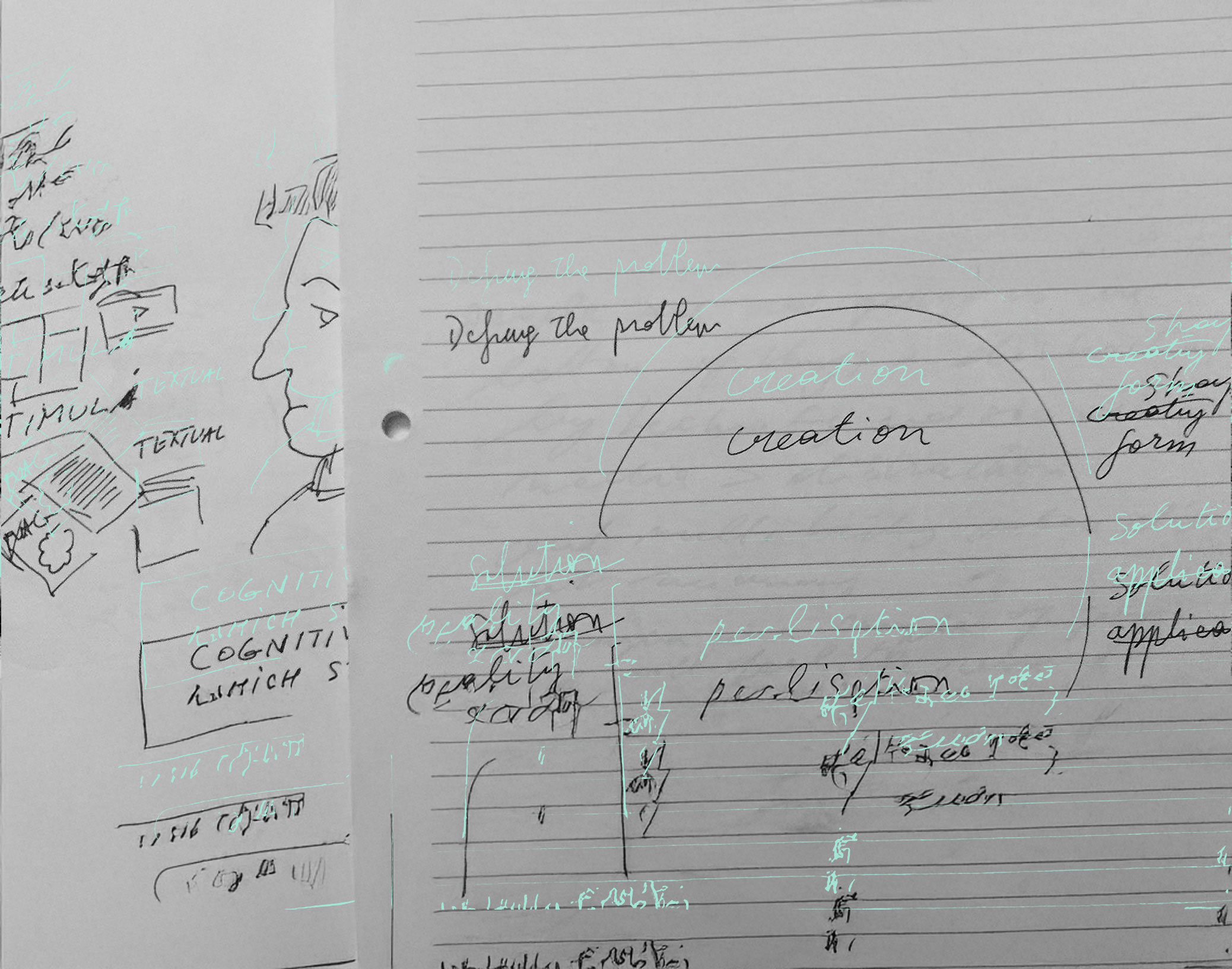
The written products of Medieval monasteries and courts laid the foundation for secular and commercial practices in private and public life. As scholarship increased, the form of the book developed. A radical design change occurred, as the serial (linear) access mode of the scroll shifted to the random access mode of the codex with its graphic navigational systems. Format features still integral to book design were invented, and visual knowledge was generated and sustained. The great legacy of classical and theological literature was preserved and studied, and conventions for illustration and graphic forms of information were established. The secularization of knowledge amid changing cultural conditions was marked by the emergence of publishing practices that were poised to flourish with the arrival of printing.
From craft to code
In the old days, the evolution of design responded to the pace of invention. The printing press enabled the spread of knowledge. The industrial revolution spawned an explosion of visual data that cried out for new kinds of clarity. The 20th century offered the gift of the grid system, of systems thinking, of the rationality of the visual—culminating in the modernist dream of universal design.
And then the computer arrived. Karl Gerstner’s theoretical notion of “programmed design” became a reality. Designers could now create systems that would produce an infinite variety of permutations. The designer’s touch began to be replaced by logic, by parameters, by the mouse.
Each new technology has seen a shift in contemporary graphic design aesthetics, and design historians have made detailed studies of the impact of each change in both working methods and materials. The development of photolithography between the 1920s and 1950s, for instance, prefigured a widespread shift to the inclusion of photographs – rather than woodcuts, etchings and hand drawn illustrations – within a range of inexpensive printed matter such as posters and magazines. Similarly, the late 1980s and 1990s saw the development of a range of previously inconceivable design methods which could be achieved only through the use of computer technology. (Noble and Bestley, 2004)
How much computers change – or can change – not only the procedure of the work but the work itself. (Gerstner, 1968)
The screen as medium
With the advent of the screen as a medium of design, everything began to change once again. The screen is not a page. It is a live surface. It is a responsive, connected, and adaptive surface. Suddenly, the medium of design had to move, had to change, had to adapt.
With the advent of Tim Berners-Lee’s web and the first browsers, the medium of design taught us an important lesson. Content is no longer static. Context is king. Suddenly, the designer’s job is no longer merely to arrange. It is to orchestrate.
In a digital media process all input data are converted into numbers. In terms of communication and representational media this ‘data’ usually takes the form of qualities such as light or sound or represented space which have already been coded into a ‘cultural form’ (actual ‘analogues’), such as written text, graphs and diagrams, photographs, recorded moving images, etc. These are then processed and stored as numbers and can be output in that form from online sources, digital disks, or memory drives to be decoded and received as screen displays, dispatched again through telecommunications networks or output as ‘hard copy’. (Lister 2009)
Toward device-oriented design
To have a device-oriented perspective is to recognize that every device is a lens, a behavioral ecosystem unto itself. Design is a product of this ecosystem, not in spite of it.
- Device as Lens: Devices shape our perceptions uniquely, by scale, ergonomics, and attention span.
- Device as Partner: Intelligent systems now anticipate user intent, not merely react to user actions.
- Device as Stage: Experiences are dynamic, defined by when, where, and how they are accessed.
It’s not about fitting rectangles into rectangles. It’s about creating meaning within a constantly changing world.
Digital design is so pinpointed, straight obsessed with devices and their development, that most of the other issues and general topics of design are completely overlooked.
The numerical coding of media (p1) and the modular structure of a media object (p2) allow for the automation of many operations involved in media creation, manipulation and access. Thus human intentionality can be removed from the creative process, at least in part. (Manovich, 2001)
The next shift
As AI, sensors, and spatial computing evolve, design is leaving the screen once again. The future won’t be about designing for devices but with them—co-creating adaptive, context-aware experiences that merge digital and physical realities.
Design’s evolution continues, not as a reaction to technology, but as its reflection.
In short: Design doesn’t just adapt to devices—it learns from them. The medium remains the message, and the designer remains its translator.