

The trained instinct: Why I still design with gut
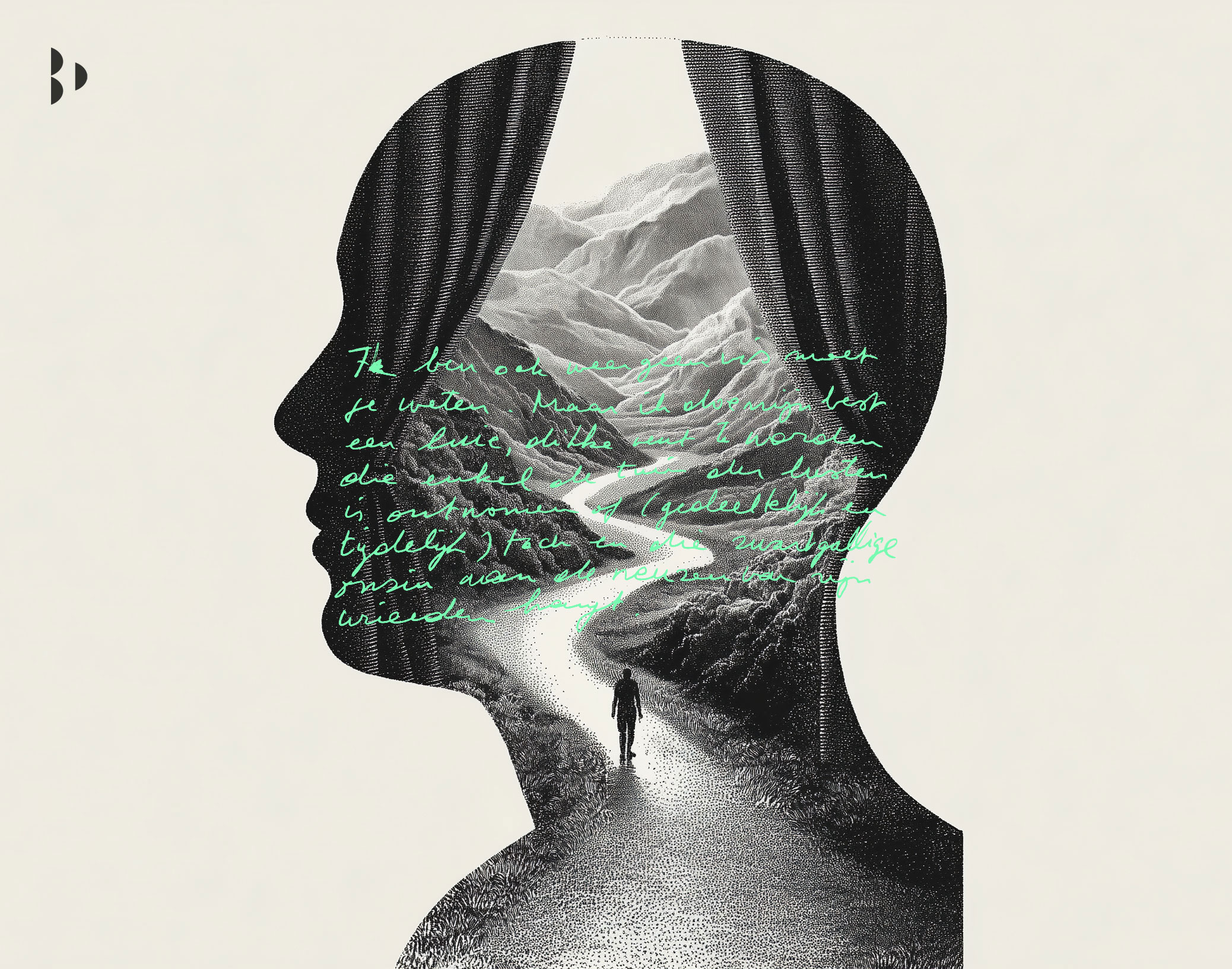
01 Instinct
The gut knows before the brief does.
I once presented a concept to a room full of stakeholders, all armed with opinions and slide decks full of data. Four seconds after I opened the file, the CMO said, “That one.” Four seconds. We’d spent six weeks getting there, and she’d spent four seconds confirming it. That’s design with gut, and it happens more often than any of us like to admit.
Design is a sensory practice, and we keep forgetting it. In the rush toward clarity, we’ve sacrificed the noise. But the gut lives in the noise. And the gut is what gives the work its pulse.
We spend a great deal of time discussing user needs, insights, data. The gut, though, is the thing that stops someone dead in their tracks. They pause because something resonates. That’s rarely the result of reasoning.
Daniel Kahneman spent a career proving as much: System 1, fast and intuitive, versus System 2, slow and analytical. One of them always gets there first.
Instinct leads. Insight follows.
Gut isn’t guessing
Sometimes I’ll show a direction after an hour of work and the client says, “Exactly what I was thinking. How did you know? That’s it!” I used to take that as a compliment about my mind-reading. It isn’t. It’s a compliment about my mileage.
What they don’t see is that none of it was luck. It was gut, but not the kind you’re born with. The trained kind.
After years of working with clients across wildly different industries, I’ve come to believe instinct isn’t some mystical gift. It’s a sophisticated mechanism, a high-speed, subconscious decision-maker built from experience, pattern recognition, emotional intelligence, and the ability to sense what’s left unsaid.
The gut is precise.
It lives in the body. It’s compressed memory. And the more you feed it, the faster it gets.
02 Iteration
Listen to your gut. Then test it. Break it. Shape it.
Gut isn’t laziness. It’s not an excuse to skip the craft. It’s the starting point, the thing that drives you to go and explore in the first place. Iteration is where instinct gets tested, the place where you question it, push it, take it apart to see whether it still holds.
That’s the real difference between instinct and ego. Ego defends itself. Instinct grows.
The First Things First manifesto (1964, revisited in 2000) is still worth reading, six decades on. It’s a blunt call for work that prioritises meaning over manipulation. The fact that it still needs saying tells you something about how slowly this industry actually learns.
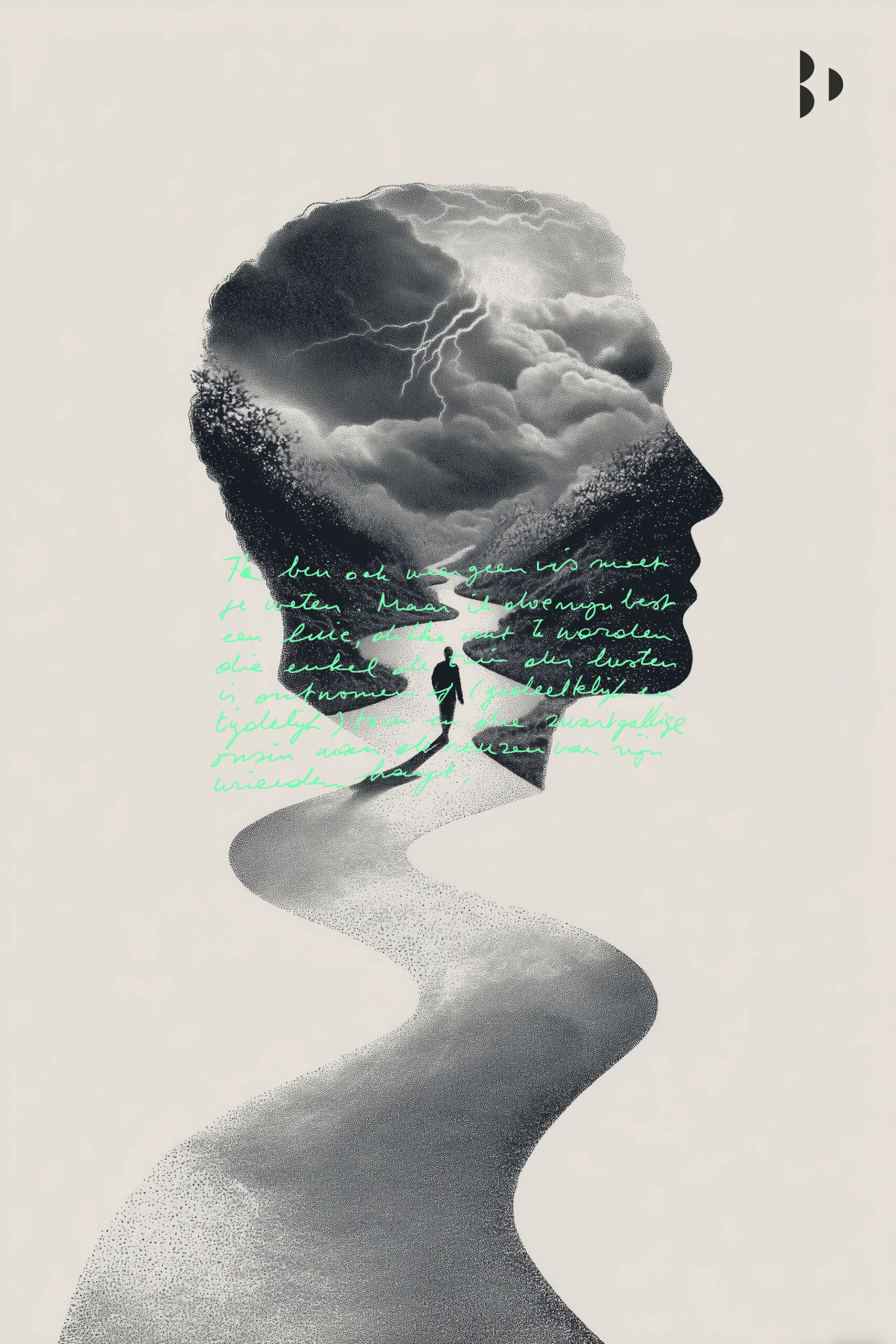
03 Insight
Insights do not guide the process. They emerge from it.
We’re addicted to rationalising things after the fact. Rationality doesn’t light the spark, it explains the flame once it’s already burning. Data isn’t a muse. It doesn’t tell you what to make. It helps you understand why you made it, and whether it’s working. The brain always catches up to what the body already knew.
Harvard research places creative insight in the Default Mode Network, the same part of the brain that switches on when you’ve finally stopped trying so hard.
Meaning: The idea arrives when you let go of it.
The intuition gap in the age of AI
We’ve built genuinely impressive technology. Generative AI is fast, prolific, and, in its own way, creative. But it doesn’t feel anything. It doesn’t want anything. It doesn’t take a risk it can’t calculate. And if we’re not careful, we’ll start designing like it does: safe, referential, average, predictable. The real danger AI poses to designers was never that it would replace them. It’s that it lets them outsource the one thing that made their work theirs in the first place.
Don’t give away the part that only you have.
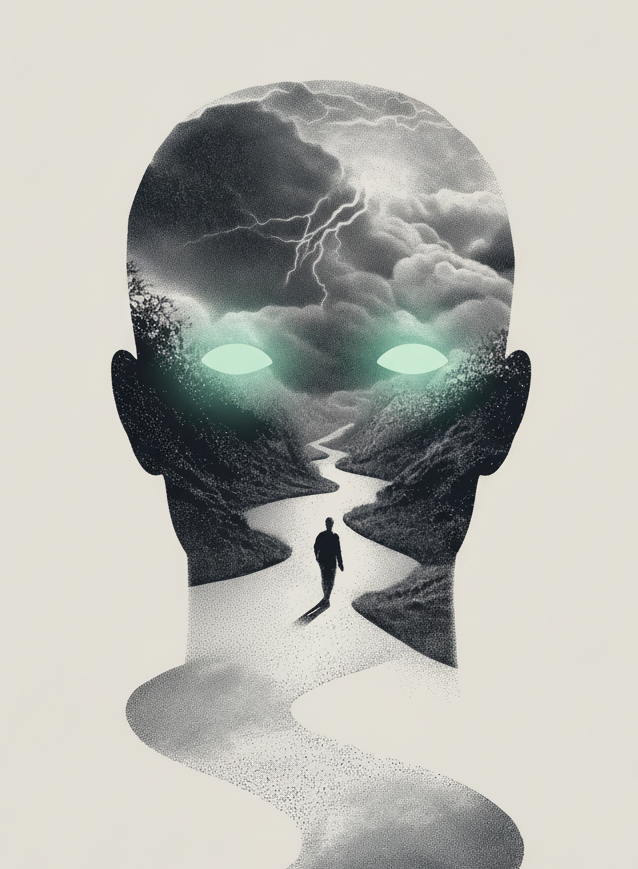
The creative intelligence stack
Design was never gut versus brain. It’s both, in the right order. And the more we automate the layers above, the more fiercely we need to protect the layer underneath.
| Layer | What it brings | Who owns it? |
|---|---|---|
| Creative Soul | Intuition, desire, vision. The raw, emotional spark. | Human only |
| Design Muscle | Craft, rhythm, spatial intelligence. | Human + AI assisted |
| Strategic Brain | Logic, structure, positioning. | Shared domain |
| Data Skeleton | Signals, trends, patterns, feedback. | AI dominant |
Let the brain be brilliant, but only after the body has spoken.
AI authentication note: they’re a mix of genuine scanned handwriting (marker on notebook paper), layered in Photoshop over AI-generated imagery (Midjourney v7) of human heads filled with a scene of someone walking a path through nature.