
Digital Legacy
1997 Le Violon Interactive Encyclopaedia
Le Violon, des hommes, des œuvres was one of the defining multimedia CD-ROM projects of the late 1990s—and the third large-scale interactive title I worked on as a freelance junior Interaction Designer at Magic Media, a Belgian new-media studio known for pushing the boundaries of cultural CD-ROM publishing.
Client
Magic Media (BE)
Accord Parfait (FR)
Services
Interaction Design
Digital Design
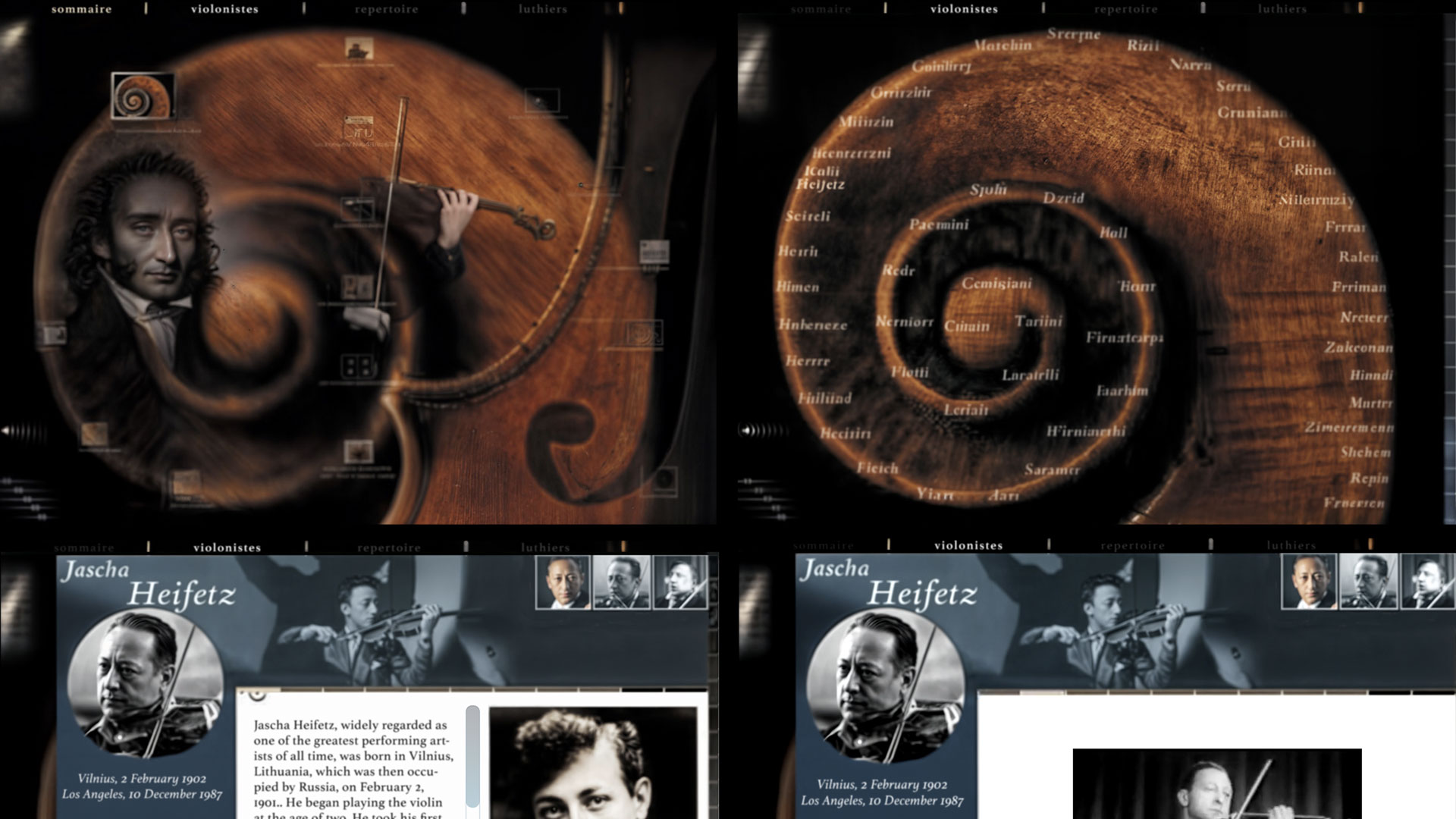
The project set out to do something unprecedented: create the first true digital encyclopedia of the classical violin, bringing together history, repertoire, makers, performers, sound, and image in a single interactive environment. At a time when the web was still largely static, this CD-ROM demonstrated what rich, exploratory digital knowledge systems could be.
My contribution focused on interaction design elements that shaped how users navigated this vast body of content. I worked on the violinists’ biographies and on the curved navigation system embedded in the head of the violin—an interface that translated the physical form of the instrument into a functional, intuitive navigational metaphor. It was an early exercise in spatial and object-based navigation, long before such ideas became common in digital interfaces.
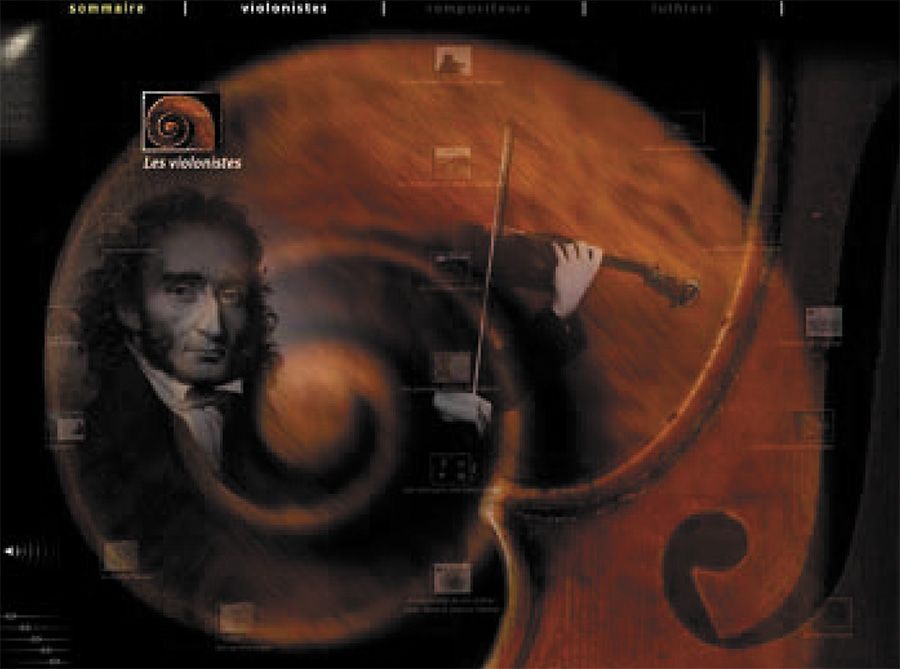
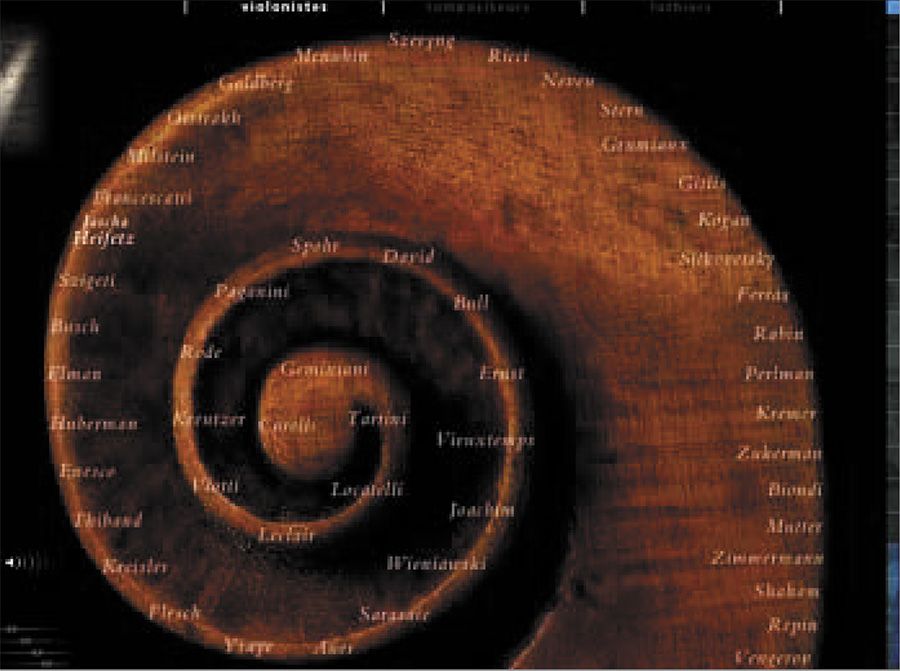
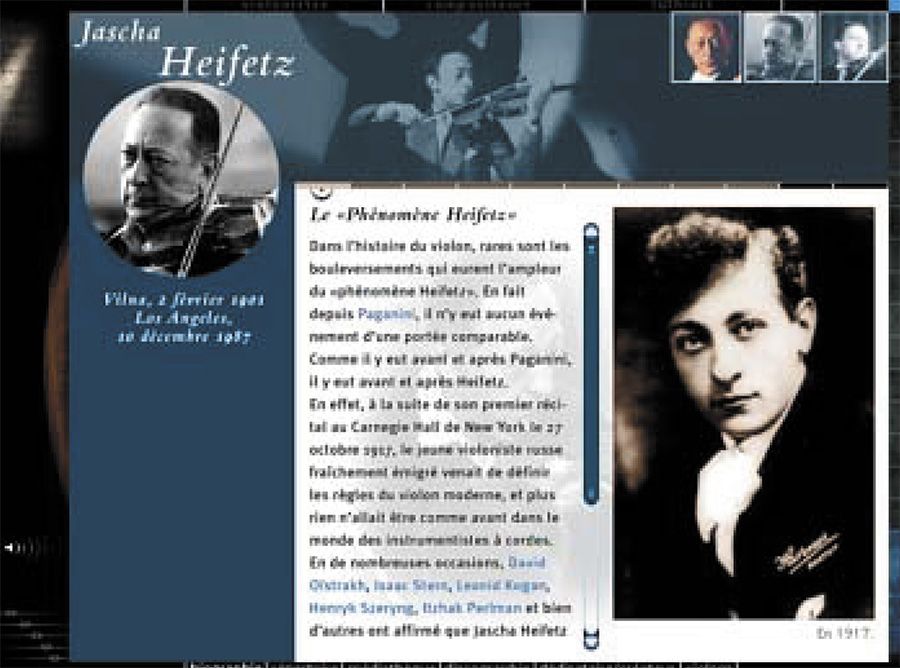
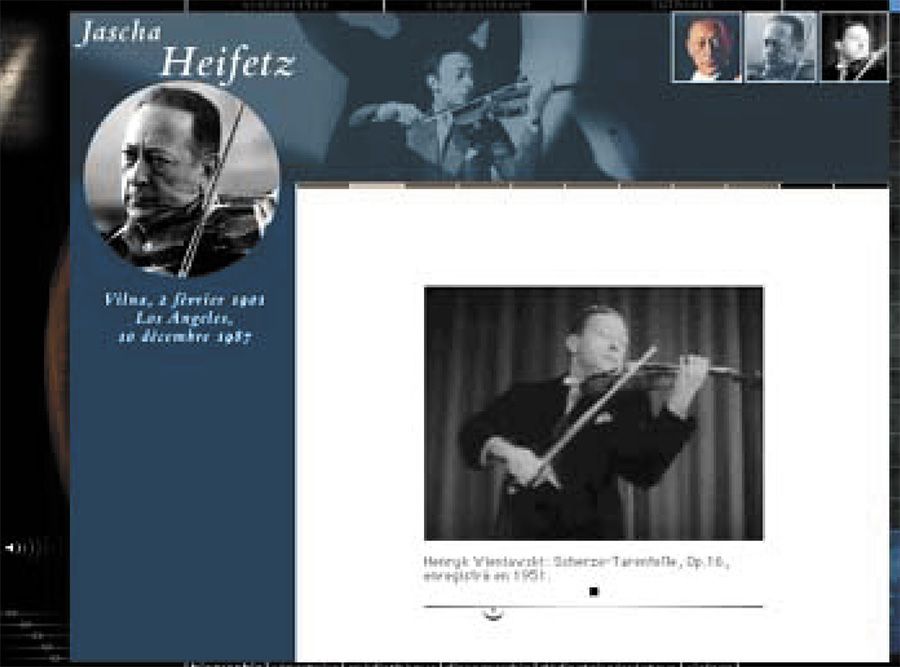
The CD-ROM was built around a sophisticated database that allowed both exploratory browsing—through thousands of interconnected links—and precise multi-criteria search across composers, works, performers, and makers. Advanced features such as a 3D chronological interface and a richly illustrated media library placed the project firmly at the forefront of interactive design at the time.