
How technology quietly shaped the way we see, long before the camera.
For centuries, we’ve been taught that realism in art was born from sheer talent, artists suddenly discovering how to master perspective, proportions, and observation. But if we examine the history of art, we find a different story. The development of “realistic” art was not just about genius. It was about technology.
In his book Secret Knowledge, David Hockney explains that the sudden emergence of realism in the 15th century was accompanied by the use of optical instruments. Artists started to use these instruments to satisfy the new requirement for realistic portraits, landscapes, and scenes of everyday life. Unfortunately, the instruments themselves are gone, but their influence can be seen in the paintings. Almost overnight, Western art became remarkably realistic.
Hockney’s thesis challenges the popular modern idea that artistic talent develops in isolation from technology. Modernism celebrates the individual genius. But was the “objectivity” of realism and the “subjectivity” of the artist not already being mediated by the technology we so conveniently forget?
Technology behind the mastery
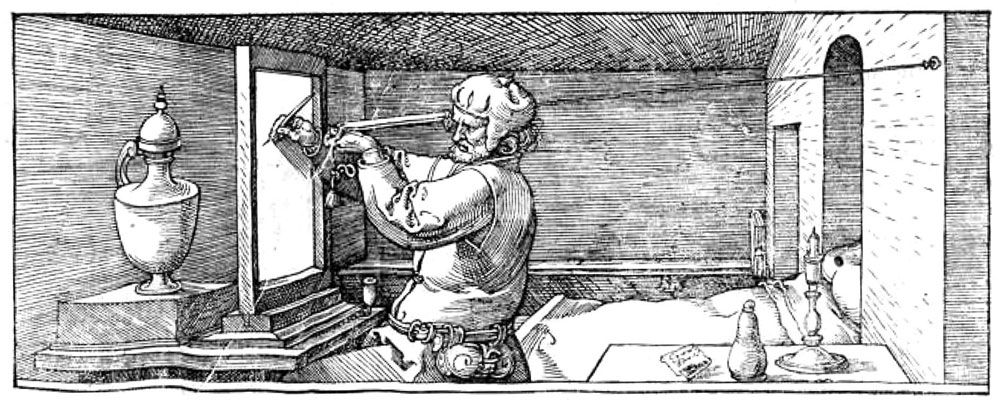
We can observe this in Albrecht Dürer’s “Unterweysung der Messung” (1525), in which he describes and pictures devices for measuring and creating a more realistic representation of the world. These were not gimmicks; they were essential tools for the trade. Philosopher Peter-Paul Verbeek extends this in his research on technological mediation, showing that realism in the Renaissance was not just a matter of the eye and brain of the artist but was always mediated, structured, and augmented in some fashion.
Another level is added in Don Ihde’s research on the camera obscura. If we follow Hockney’s argument that many artists in the Renaissance used such a device, then realism is inextricably linked to optical technology. However, the use of such devices was seen as “cheating,” and this reveals our modern preoccupation with artistic purity and the need for expression to be untainted.
A new kind of vision
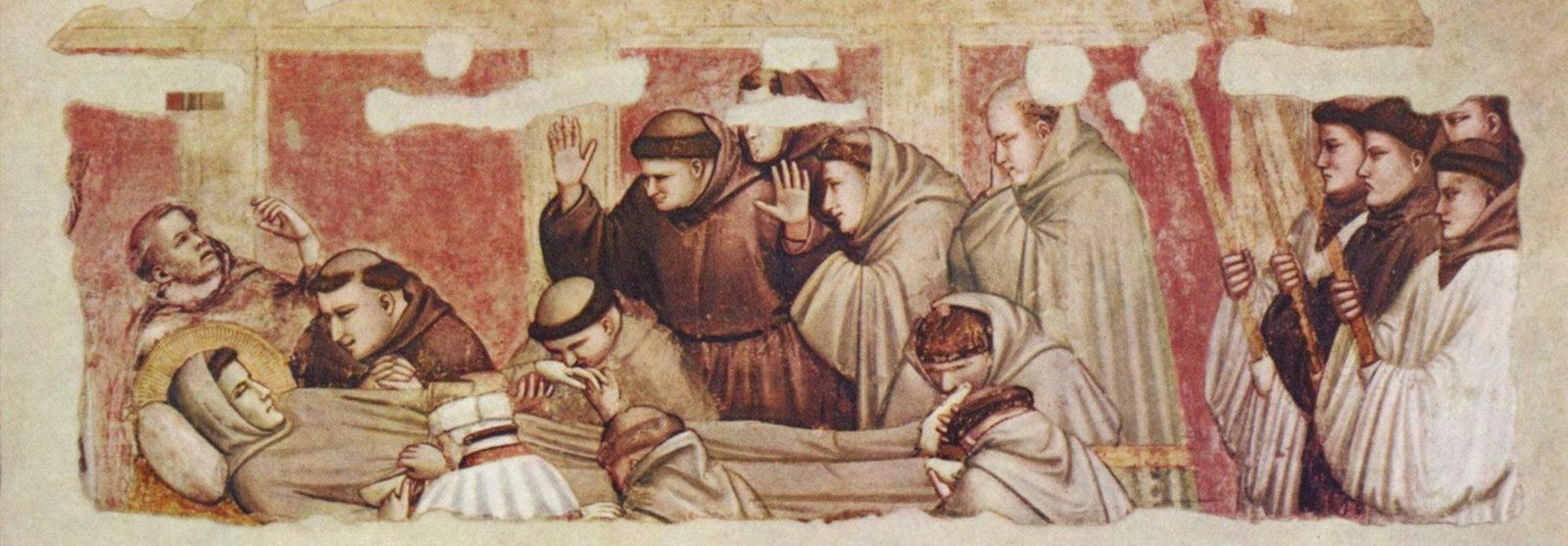
As Panofsky and Ihde both note, the Renaissance did not only improve technique but also altered the very way of seeing. The camera obscura brought the innovation of linear perspective, giving us a mediated image that felt like the “real thing” like never before. It did not only represent the real; it reorganized it.
Renaissance realism from this perspective is not the glorious birth of realistic representation. It is the early adoption of a technology that reorganized the way we would represent the real.
Not only did painters have the monopoly before photography, but even the realism of the painters before photography relied on a series of devices: the camera obscura, concave mirrors, lenses, the camera lucida, photographic fixations, industrial reproduction, and digital imaging. It redefined what the real even is.
From Renaissance Realism to Symbols Again
Today, we seem to be going the opposite route. The way we are representing images today is becoming symbolic. The new devices we are using to mediate our images are causing us to go the route of abstraction.
Erwin Rosenthal summarized the historical tendency of artists across the centuries: “To accept the external world or to reject it in favor of ideas has been the perennial choice of artists.” We are merely continuing the cycle.
Resources:
Erwin Rosenthal: The Changing Concept of Reality In Art
David Hockney: Secret Knowledge: Rediscovering the Lost Techniques of the Old Masters
Peter-Paul Verbeek: Beyond the Human Eye Technological Mediation and Posthuman Visions